


Balanced performance and stable operation
Chicken Road Race RTP
Best Online Casinos to Play Chicken Road Race
- Easy account verification and smooth onboarding
- Competitive odds with frequent betting markets
- Reliable support and stable platform performance
₹130,000 + 150 free spins
- Fast registration and quick withdrawals
- Wide selection of slots and live casino games
- Generous bonuses and regular promotions
120% bonus + 250 free spins
- Multiple payment options with fast processing
- Large selection of popular betting markets
- Regular promotions for active players
700% welcome bonus up to ₹40,000
Chicken Road Race RTP describes the mathematical return model used to calculate long-term payouts within the game. This section focuses on probability logic, expected return percentages, and how outcomes distribute over extended play. Understanding this parameter helps players compare risk levels, evaluate payout efficiency, and interpret results based on verified statistical design rather than short-term variance.
What is RTP in Chicken Road Race
In Chicken Road Race, RTP (Return to Player) represents the theoretical percentage of total stakes returned to players over an extended period of gameplay. For example, an RTP of 96% indicates that, on average, ₹96 is returned for every ₹100 wagered across many rounds. This figure reflects long-term statistical behavior rather than results from individual sessions.
RTP is calculated using the game’s mathematical model, which evaluates outcomes across a large number of simulated plays. The total amount paid out is measured against the total amount wagered to determine the final percentage. Independent testing agencies typically review these calculations to confirm accuracy and fairness.
Understanding RTP helps players assess the overall payout structure of Chicken Road Race casino. While it does not predict short-term results, it provides insight into expected returns over time and supports more informed decision-making during gameplay.
Understanding RTP in Chicken Road Race
Return to Player, or RTP, represents the percentage of wagered money a slot game like Chicken Road Race pays back to players over time. This theoretical figure is an essential factor for gamblers when determining potential returns. In Chicken Road Race, understanding RTP can influence your gaming strategy, providing a clearer picture of possible outcomes across your play sessions.
- RTP Definition: RTP is a statistic representing how much wagered money is returned to players.
- Calculation Method: It is calculated by dividing the total amount returned to players by the total amount wagered in the game.
- Long-term Measure: RTP is assessed over thousands or millions of game rounds, not a single play session.
- Percentage Display: Typically, RTP values are expressed as percentages, indicating potential returns.
- Game Variability: Actual returns can vary in the short term, differing from the RTP value.
- Influence on Strategy: High RTP games may attract players due to their theoretical payout potential.
Recognizing RTP in games such as Chicken Road Race is crucial for wise decision-making. Knowing that a game has a high RTP may appeal to you if you are strategizing for longer play sessions. Conversely, understanding the short-term variability can help manage expectations and budgeting, maximizing enjoyment and minimizing risk.
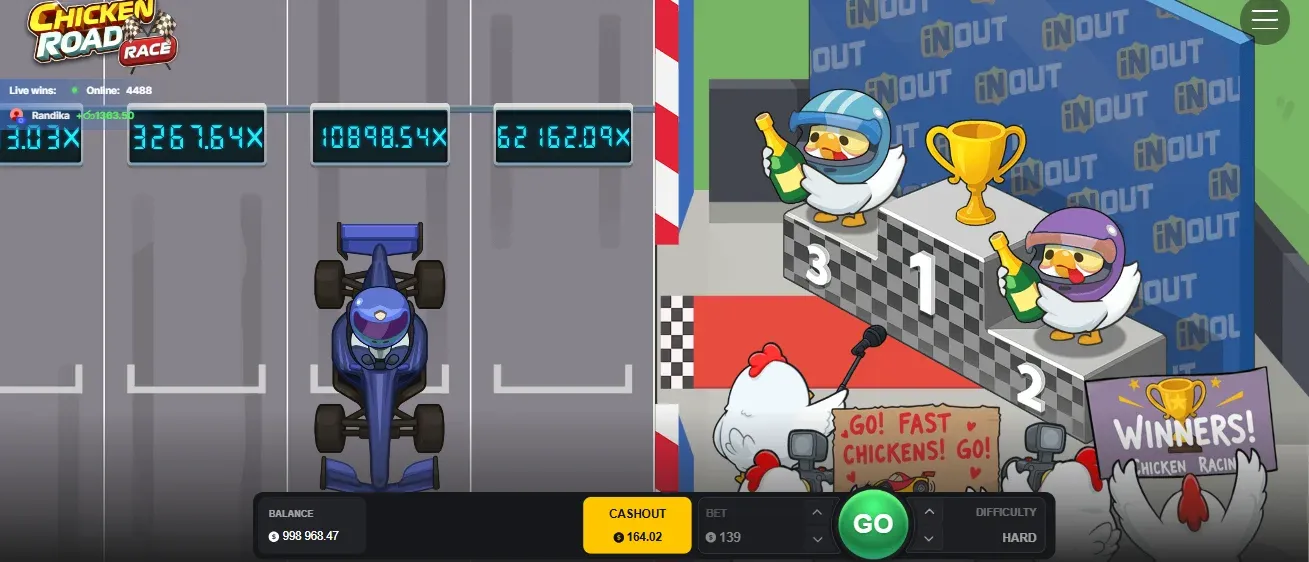
Factors That Affect RTP in Chicken Road Race
In games like Chicken Road Race, understanding the nuanced factors that influence the Return to Player (RTP) is essential for making informed choices. The RTP signifies the percentage of wagered money a game is expected to pay back to players over time.
Volatility: High volatility games offer larger wins less frequently, affecting short-term RTP perceptions, while low volatility games provide smaller, regular wins.
Bet Size: Betting maximum amounts can alter bonus activation and payout dynamics, impacting RTP calculations during play.
Session Length: Prolonged sessions may align closer with theoretical RTP, whereas short sessions might see varying payout experiences.
Bonus Features: Games like Chicken Road Race include bonuses that can change payout frequency and size, influencing theoretical and actual RTP.
Game Design: Specific elements, such as symbol distribution and feature triggers, can cause RTP variations by altering expected payout rates.
These elements intertwine, shaping your overall experience in games like Chicken Road Race. High volatility might lead to games more reliant on specific factors such as session length and bet size for RTP alignment. As you engage with the game, understanding such interactions helps make strategic betting decisions.
Understanding RTP in Chicken Road Race
In the game of Chicken Road Race, understanding that RTP, or Return to Player, reflects statistical variability is essential. While RTP provides an average expected return over a long period, it doesn’t guarantee the outcome of individual sessions.
Random Nature of Games: Each spin is independent, with outcomes driven purely by chance, unaffected by previous spins.
Short-Term Variability: Short-term outcomes can deviate significantly from the average RTP due to variance.
Probability Distribution: Reward probabilities are distributed over numerous outcomes, not just one session.
Long-Term Averages: RTP reflects a mathematical expectation calculated over millions of spins.
Independent Trials: Each game session is a new trial with equal probabilities, unaffected by prior results.
Ultimately, Chicken Road Race players should focus on RTP as a long-term statistical average rather than an immediate guarantee of returns. This understanding ensures realistic expectations and highlights the nature of variability in gaming outcomes. Remember, each game session in Chicken Road Race carries its own inherent risk and reward.
FAQs
How is RTP applied during real gameplay in Chicken Road Race?
In Chicken Road Race, RTP influences outcomes across large sample sizes, not individual rounds. Short sessions may vary, while long-term play reflects the theoretical return defined by the game model.
Does Chicken Road Race RTP change between demo and real-money modes?
Chicken Road Race RTP remains identical in demo and real modes. The same probability tables and payout logic are used, ensuring consistent mathematical behavior regardless of whether funds are virtual or real.
Can RTP be affected by bet size or session length?
RTP is independent of stake size and session duration. Higher or lower bets do not change the return percentage, only the variance and monetary impact of wins or losses.
How does volatility interact with RTP in Chicken Road Race?
In Chicken Road Race, RTP defines expected return, while volatility determines payout distribution. Medium to high volatility means returns may cluster into fewer, larger outcomes over time.
Why is RTP important when comparing Chicken Road Race with other games?
Chicken Road Race RTP helps players compare payout efficiency across games. While it does not guarantee profit, it provides a standardized metric for evaluating long-term return potential